Have you heard of the Touch-it-Once rule? Have you tried it, and it simply didn't stick?
The idea behind the Touch-it-Once rule is to handle items only once and not shuffle them from place to place. It is great in theory, but not always practical or easy in real life.
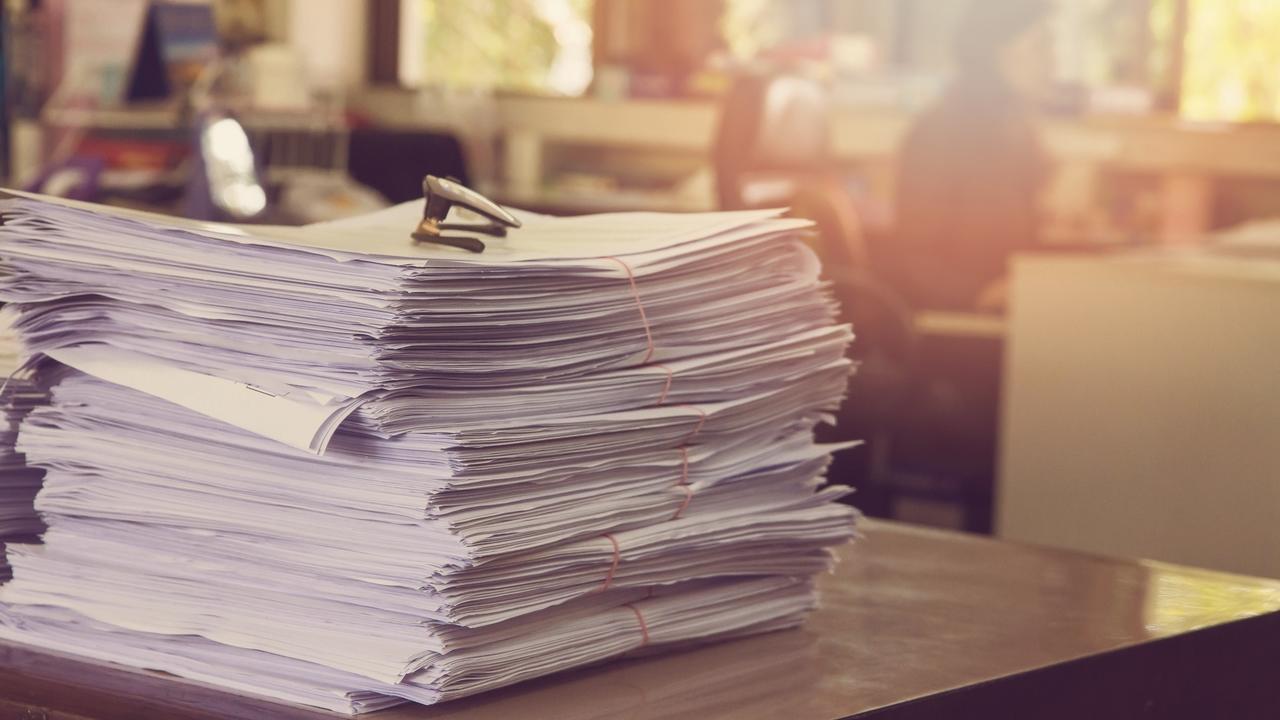
I tried years ago to implement the rule with my paperwork and even used the suggestion to mark each piece of paper with a red dot every time I touched it.
Needless to say, my papers looked like they had measles!
I knew I needed to find another way.
What Is the Touch-it-Once Rule?
The Touch-it-Once rule means that once you touch an item, you deal with it right away. You do not put it down, move it to another pile, or save the decision for later.
For some things, this works beautifully.
For other things, especially paper, mail, bills, email, and digital information, it is not always that simple.
While it would be great to train ourselves to do this with everything, our natural way of working and life can get in the way.
For example, it is highly unlikely that most people will open a bill, pay it right away, and then file it.
Are there people who do this?
Of course.
But that doesn’t mean it is efficient or attainable for everyone.
I personally don’t like filing!
Yes, the Professional Organizer and former Accountant who specializes in paper and digital information management finds no joy in filing papers. However, give me a pile of papers to purge, and I am in my happy place.
My Alternative: Touch It the Least You Can
I started to apply what I call the Touch It the Least You Can rule.
The goal is not to touch everything once.
The goal is to stop touching the same thing over and over without making a decision.
That small shift makes the process much more realistic.
I bring my mail in each day and put it on my front table. Then, and only when I am ready to process it, I bring the pile to my desk.
I recycle or shred all the junk and sort the rest into categories.
My categories are:
To Do
To Pay
To Read
To File
I use a 10-pocket folder to keep these items contained until I am ready to take action.
The papers to be filed go into a folder in the front of my filing cabinet. This way, I know that if an item isn’t in its proper folder yet, I can find it in the front easily.
I also use these same categories for my digital bills and action items. I have these digital folders on my computer, in Evernote, and in my email filing system.
I pay my bills twice a month and file all my papers when my To File folder gets too thick.
So this process has me touching my papers about four times:
Mail retrieval
Process
Action
File
Is that technically Touch-it-Once?
No.
Is it realistic, organized, and easy for me to maintain?
Yes.
And that matters more.

Where Do I Recommend Trying the Touch-it-Once Rule?
Anywhere you think you can be successful.
The Touch-it-Once rule works best when the decision is obvious, and the item already has a home.
Places I have been successful:
- I put my dirty clothes in the hamper immediately after removing them.
- I hang up my coat and put away my shoes when I enter the house.
- I try to hang my keys on the key rack. I have struggled with this in the past, but I have come a long way and now do this about 95% of the time.
- I remove trash from my car each time I leave it.
These habits work because they are simple, repeatable, and do not require a lot of extra decision-making.
Paperwork is different.
Digital clutter is different.
Bills, forms, receipts, downloads, and emails often require another step, more information, or a decision that cannot always happen immediately.
That is why Touch It the Least You Can may be a better approach.
A Better Question to Ask
Instead of asking, “Can I touch this only once?” ask:
“What is the next step for this?”
That next step might be to pay it, file it, read it, shred it, recycle it, save it, or add it to a task list.
Once you know the next step, you can put the item where it belongs until you are ready to take action.
Do you have daily habits where the Touch-it-Once rule works well?
Can you think of one small habit you can implement?
And if the Touch-it-Once rule has not worked for your paper or digital information, maybe the goal is not to touch it once.
Maybe the goal is simply to touch it less.
The goal is not to become a perfectly organized person who handles everything immediately.
The goal is to create simple places for things to land, clear next steps, and systems you can actually maintain.
If your paper or digital information feels harder than it needs to be, I can help you sort through it and create a process that works for you.